

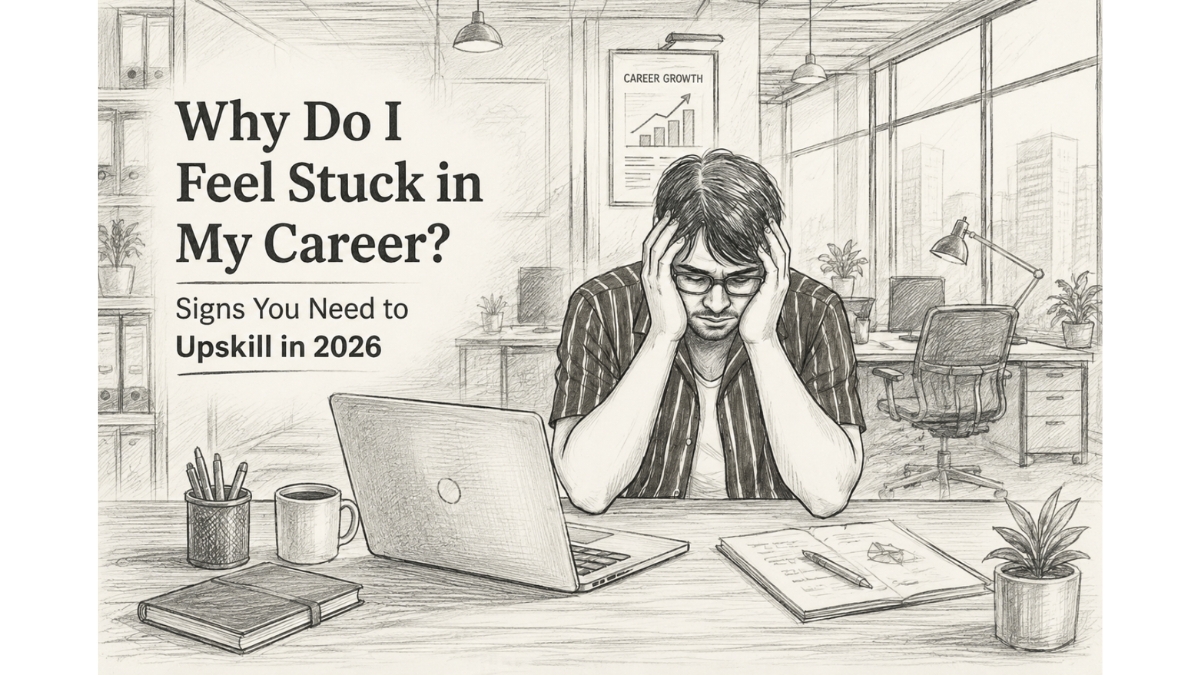
New Delhi [India], July 6: Feeling stuck despite a stable career is often a sign of a growing skills gap rather than burnout. According to research from Resume Now, 60% of workers feel “stuck and unfulfilled,” and 66% believe changing careers would boost their happiness. But Upskilling in AI, data, cybersecurity, and communication can actually improve career resilience and earning potential.
How would you feel in these situations
- A younger colleague mentions a tool so casually that it’s obvious they’ve been using it for a year. You’ve never heard of it.
- You get excited about a job listing. Then you read the requirements section. Your stomach does a small thing.
- A meeting goes fine for everyone else. You follow maybe 70% of it.
- Someone asks if you want to take on a stretch project and you hesitate — not because you don’t want it, but because you’re not sure you’re ready
This isn’t burnout. Genuinely. And it’s not the wrong career. People who feel this way are usually among the more self-aware professionals in any room — which is exactly why it bothers them.
What a Skills Gap Is — and Why It Sneaks Up on Everyone
Simple version: it’s the distance between what you can do today and what your field is going to need in two, three, maybe five years.
Not what it needs right now. What will it need? That’s the part people miss — the gap forms before the consequences arrive.
Here’s a useful example. Six or seven years ago, Excel proficiency was a genuine differentiator. It opened doors. Then — nobody sent a memo — the bar moved. Now, hiring managers want data visualisation. Some Python familiarity, or at least a working understanding of how AI tools are changing analysis day to day. The goalposts shifted while everyone was heads-down in their work.
Signs you might have a gap in the future forming right now:
- Getting passed over for promotions or good projects more than once, with no clear reason given
- Job listings in your field list tools you’ve never touched
- You can’t actually remember the last time you learned something genuinely new at work
- Your industry feels like it’s moving faster than you can track
- You’re confident in your current job, but not confident you’d get it if you applied today
This doesn’t mean you’re a bad professional. It’s just you’re a normal person in a market that moves faster than most workplaces push people to keep up with. The question is whether you act on it before stagnancy in the future gets harder to reverse.
The Money Reality
Professional growth isn’t just about feeling less anxious. It has a direct, documented effect on what you earn.
LinkedIn’s 2025 Workplace Learning Report: professionals who actively upskill earn 20–30% more than peers with similar experience but older skill sets.
Every year you wait, that gap compounds.

A Realistic Action Plan for 2026
Knowing you need to upskill is one thing. Knowing what to learn and how to learn it efficiently is what separates career growth from wasted effort.
1. Start with job descriptions, not assumptions.
Find 5–6 job listings for the role you want in the next two years. List every skill, tool, or competency that appears repeatedly and ask yourself: Can I confidently demonstrate this in an interview or on the job? The gaps you identify are your true learning priorities.
2. Focus on a handful of high-impact skills.
Resist the temptation to learn everything. Instead, choose two or three skills that consistently appear across multiple roles and align with your career goals. Depth creates opportunities; scattered learning rarely does.
3. Invest in structured learning.
While free tutorials are useful for exploration, they often lack accountability, mentorship, and practical application. A well-designed program that combines industry-relevant curriculum, expert guidance, and hands-on projects is more likely to help you build skills that employers value.
4. Build proof, not just certificates.
Recruiters and hiring managers are increasingly interested in what you can do rather than what you’ve completed. Publish a project, create a portfolio, document a case study, or solve a real-world problem using your new skills. Visible work speaks louder than certificates.
5. Review your progress every 90 days.
Career growth isn’t a one-time event. Set a quarterly check-in to evaluate whether you’re closing your skill gaps or simply staying busy. The market evolves quickly, and continuous learning is becoming a professional necessity.
You’re Not Behind. But the Window Won’t Stay Open Forever.
The professionals who thrive in 2026 won’t necessarily be the smartest—they’ll be the ones who keep learning. AI, data, digital transformation, and business skills are rapidly becoming career essentials.
If you’re planning to upskill while continuing your job, consider structured options such as online MBAs, executive programmes, or specialised certifications from reputed institutions like IIMs, IITs, ISB or Private institutes like BITS Pilani, Plaksha University, Chitkara University & others The right programme can help you gain industry-relevant skills, practical exposure, and stronger career credibility without putting your career on hold.
Remember, the biggest career risk isn’t AI replacing your job—it’s falling behind while others continue to learn and adapt.
The Choice is Yours
When your career stalls, it’s rarely a sign of failure—it’s simply a signal that your skills need an upgrade. You can keep pushing the decision to next quarter, watching the gap widen, or you can take action today. Closing that gap doesn’t require a dramatic reinvention; it just requires a smart start.
If you object to the content of this press release, please notify us at [email protected]. We will respond and rectify the situation within 24 hours.
